

The National Risk Analysis DES 2025 – Natural Hazards
Not all natural hazards pose the same level of risk. Some strike frequently but cause moderate damage, while others are rare but devastating when they hit.
The national risk analysis DES examines 16 natural hazards relevant to civil protection. The top three biggest natural hazard risks are drought, storms and heat waves. They occur frequently and cause considerable damage. But when we look at sheer destructive power, a different picture emerges—earthquakes, floods, and storms cause the most extensive damage when they occur.
The national risk analysis DES
The national risk analysis Disasters and Emergencies Switzerland (DES) provides risk-based planning bases for organisations that are strategically or operationally responsible for managing disasters and emergencies in Switzerland. This systematic evaluation examines natural, technological and societal hazards that could impact the country. A total of 44 hazards were analysed as part of the fourth edition of KNS 2025. Two new natural hazards were added: heavy rain with surface runoff and rockfall were analysed in detail.
More information on the national risk analysis can be found in our previous blog post or on our website. This blog post focuses on the natural hazard risk across Switzerland.
Switzerland’s natural hazard profile
Switzerland’s dramatic landscape—with its towering mountains and extensive waterways—creates exposure to a wide range of natural hazards. Landslides, rockfalls, floods, and avalanches are regular occurrences shaped by the country’s steep terrain and gravitational forces. Meteorological hazards add another layer of risk. Storms, droughts, heat waves, and cold spells affect the entire country and happen with notable frequency.
Then there are the less frequent but potentially catastrophic events. Major earthquakes strike rarely, yet they represent the single greatest damage potential of any natural hazard facing Switzerland. Even rarer—but still worth considering—are space weather events like solar storms and meteorite impacts.
Finally, slower-moving hazards deserve attention too. The gradual spread of invasive species may lack the drama of an avalanche or earthquake, but these creeping hazards are equally part of Switzerland’s natural risk landscape.
Two hazards worth examining closely: drought & earthquakes
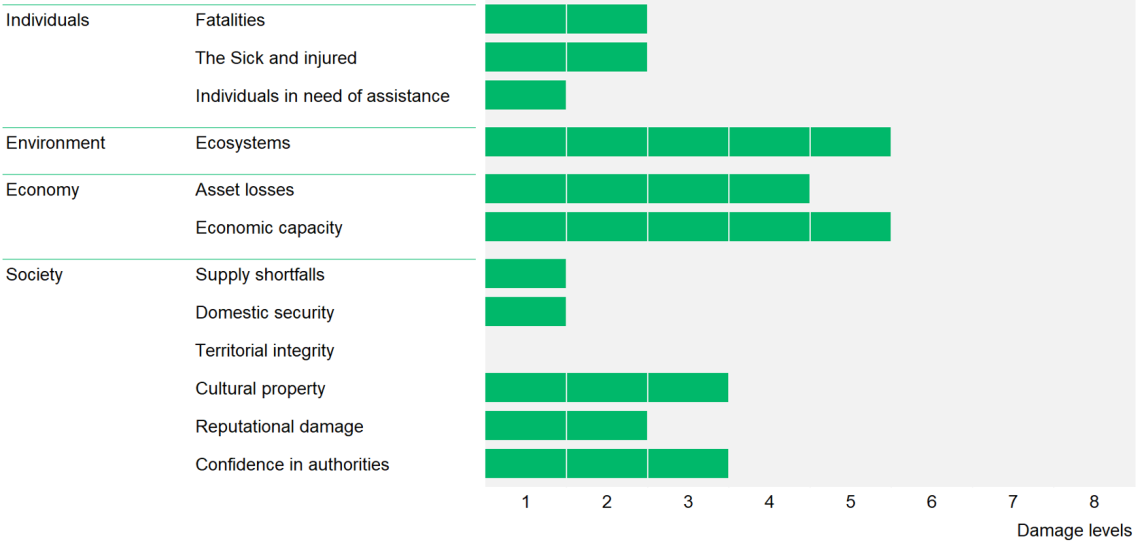
Drought ranks as the highest-risk natural hazard in Switzerland, combining frequent occurrence with substantial potential damage across many sectors (see Figure 1). The environmental impacts are wide-ranging. Watercourses, wetlands and lakes can dry up, while reduced plant resilience weakens entire ecosystems. Human health suffers too, particularly for people with respiratory conditions.
Switzerland’s drinking water supply can be guaranteed even during extended droughts, but local authorities often need to impose water conservation measures – such as garden watering or car washing bans – or agricultural irrigation restrictions. The economic toll is considerable, with agriculture facing major crop losses. Water scarcity also disrupts energy production, shipping operations, tourism, industrial processes and firefighting capacity.
Up-to-date information on drought conditions in Switzerland can be found on the Drought – National drought platform.
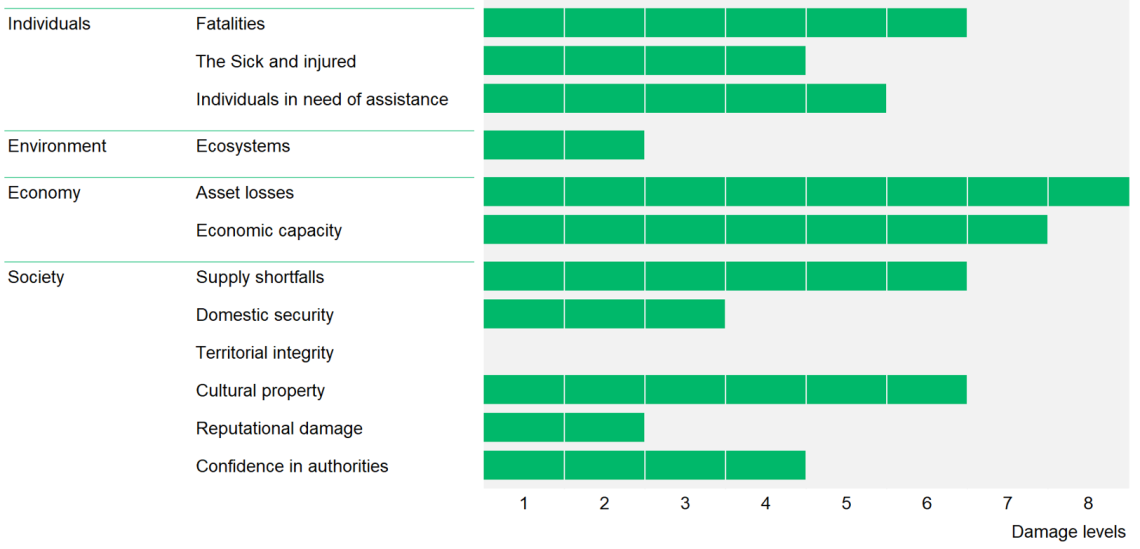
Earthquakes are considered a critical natural hazard, representing the greatest damage potential of any natural hazard facing Switzerland. A major seismic event could result in very high numbers of fatalities and severe injuries. Damage to buildings and the danger of aftershocks also mean that earthquakes generate comparatively large numbers of people requiring assistance and temporary housing relative to other hazards.
The broader impacts are equally severe. Earthquakes can cause damage to critical infrastructure, destruction of cultural heritage and significant disruption to economic performance. A strong earthquake therefore ranks among the natural hazard scenarios with the widest-ranging effects across all damage categories (see Figure 2).
Climate change and other megatrends
The ETH CSS Trend Analysis Civil Protection 2035 identifies twelve trends that will significantly influence disaster preparedness, response and recovery in the coming years. Climate change stands out as one of these key trends, directly affecting the severity and intensity of many natural hazards across Switzerland.
Extreme weather events such as heat waves, droughts and heavy rainfall are becoming more frequent and intense due to climate change. The risk of flooding, forest fires and debris flows is also amplified. This increase in risk threatens not only settlements and infrastructure but also critical systems including electricity grids and transport networks.
Climate change also creates indirect effects. Low water levels restrict shipping on the Rhine, whilst changing conditions accelerate the spread of invasive species and diseases. The near-future impacts of climate change were included and taken into account in the revision of the hazard scenarios and the DES 2025 risk analysis.
Preparing for future natural hazard risks
The national risk analysis DES 2025 confirms that natural hazards are amongst Switzerland’s most significant risks in the years ahead. Climate change, demographic shifts and increasing reliance on critical infrastructure are making events both more likely and more severe, whilst also raising the potential for cascading failures across multiple systems.
This underscores the importance of forward-looking, risk-based planning and effective coordination between the federal government, cantons, municipalities and other partners. Strengthening Switzerland’s resilience to natural hazards requires ongoing improvements in prevention and preparedness, incident response and recovery.


